Overview
Your Minecraft server just crashed for the third time this week, and the same unfamiliar username shows up in the console log each time. Or a friend swears they logged on last night, but you were not around to see it. The Apex server panel keeps a record of exactly who has connected to your server, when, and from which IP address, through Player History.
Separately, the panel tracks who is allowed to help you run the server itself. Panel Users lists every account with FTP or panel access, their FTP username, and their role, such as Owner, so you always know who besides you can touch your files and settings.
This guide covers three things: how to look up a player’s connection history, how to manually add a player entry, and how to see and manage who has administrative access to your panel. If you are looking to ban a player, set up a whitelist, or grant in-game permissions, Apex has dedicated guides for each of those, since none of the screens covered here handle them directly.
How to View Player History
Player History is a searchable log of every player who has connected to your server, by name, last-seen date, or IP address.
- Head towards your Apex server panel and select your Minecraft server from your list of servers.
- Click “
Server Management” in the left-hand menu. - Select “
Player History“.
- Search by player name, last-seen date, or IP address to find the record you need.
Each result returns three pieces of information: the player’s name, the date they were last seen, and the IP address they connected from. That is usually enough to answer an ownership question without touching a single config file.
If the same unfamiliar name or IP address keeps reappearing after you have already dealt with a troublemaker under a different account, this is how you catch it. Cross-check the IP address before deciding whether a repeat visitor deserves a ban through Apex’s console or in-game ban commands. The same screen doubles as a quick way to confirm a friend actually made it onto the server, or to check exactly when someone last played, without asking them directly or digging through chat logs.
How to Create a New Player
Most players show up in Player History automatically the first time they connect. Creating a player manually is useful if you want to pre-register a name, for example to line it up with a panel user account before that person ever logs in.
- From the Player History screen, click “
Create Player“.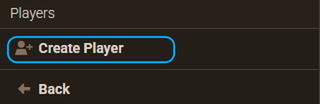
- Enter the player’s “
Name“. This is the only required field. - Optionally, use “
Assign to user” to link this player entry to a registered panel user account. - Click “
Create“.
That is the entire form. There is no role field and no ban field here: creating a player only records a name and, optionally, a linked user account. Permissions and moderation live in the separate guides linked above.
How to Manage Panel Users
Panel Users lists every account with FTP or panel access to your server, their FTP username, and their role, and lets you manage that access from one screen.
- Head towards your Apex server panel and select your Minecraft server from your list of servers.
- Click “
Server Management” in the left-hand menu. - Select “
Panel Users“.
The list here shows exactly who besides you can reach your files, your console, and your settings, and what role each account holds, such as Owner. It is the fastest way to answer “who else has access to my server” without guessing.
Double-check Panel Users after a co-owner or moderator stops helping with your server. An account that still appears on this screen still carries whatever access came with it, so reviewing the list periodically is how you keep it matching reality. Panel Users is about who runs the server with you, not who plays on it: in-game permissions, such as making a player an operator, and moderation actions, such as banning a player, are handled through separate settings with their own guides.
Conclusion
Player History, Create Player, and Panel Users answer three different questions about the same server: who has connected to it, how to add a player entry before they do, and who else can manage it. None of these screens ban a player or change in-game permissions; those go through Apex’s dedicated commands and guides instead.
Check Player History when you need proof of who connected and when. Use Create Player if you want a name on record before someone logs in. Check Panel Users when you need to know, or change, who else holds the keys to your server. Between the three, you have a full picture of your server’s player and access history without leaving the panel.