After hours of survival, you would have met every single passive mob in Minecraft. Cows, sheep, pigs, chickens, and all the others. With the Naturalist mod, it adds 47 new animals to the game, such as hedgehogs and capybaras. Some of these new mobs have unique behaviors unlike the vanilla mobs. Tigers hunt boars and pigs at night, crabs pick up dropped swords, and a tamed rat can farm crops for you. In this Apex Hosting guide, we’ll show you how to install and use the Naturalist mod in Minecraft.
If you want to compare creature mods, our guides Critters and Companions and Alex’s Mobs cover two others.
How to Download the Naturalist Mod
Download the Naturalist file and Fabric API for Minecraft 1.21.1 from the mod’s Modrinth page. The mod is required on both the server and every player’s client.
Builds for older versions exist too, but their animal lists differ. Naturalist is also listed on CurseForge.
- Open the Naturalist page on Modrinth.
- Click
Versionsnear the top of the page. - Filter the list to Fabric and Minecraft 1.21.1.
- Download the newest file, which ends in
fabric-1.21.1.jar. - Save it somewhere easy to find.
- Repeat the process on the Fabric API page for Minecraft 1.21.1.
Client Installation
Set up Fabric for Minecraft 1.21.1 on your Minecraft launcher first. Then drop both downloaded files into that profile’s mods folder. Every player who joins needs the same two mods, since Naturalist is required on the client and the server.
- Open your Minecraft launcher and click
Installationsnear the top. - Locate your Fabric profile, then press its Folder icon.
- In the new window, find and enter the
modsdirectory. If you don’t see this folder, create it first. - Drag and drop the Naturalist and Fabric API files into this folder.
- Return to the main launcher and press the Play button on your Fabric profile.
Server Installation
Set your Apex server to Fabric 1.21.1 in the Game File section, then add Naturalist and Fabric API through Modbox or FTP File Access. Restart the server afterward so both mods load. The 1.21.1 build needs NeoForge or Fabric, so the steps here use Fabric.
- Head towards your Apex server panel, then locate the
Game Filesection. - Proceed to click on the currently selected option and type “Fabric” in the search bar.
- Choose 1.21.1 as the game version, then press on it and confirm the changes.
- Restart the server so Fabric generates its required files.
Need more detail on the loader? Our Fabric server setup guide walks through it.
Install with Modbox
Modbox is our built-in mod browser with direct CurseForge integration. Install Fabric API first, then Naturalist.
- Log in to your Apex Hosting account and open your Minecraft server panel.
- On the left side, select
Server Configuration > Modbox. - Search for Fabric API and open its mod page.
- Select the recommended version for your server, then click
Install. - Repeat steps 3 and 4 for Naturalist.
Restart the server to apply the changes. Modbox automatically matches mods to your server’s installed version, but does not install dependencies automatically. For more on the tool, see our full Modbox guide.
Upload with FTP
Prefer to upload the files yourself? The FTP route works the same for any mod. Our guide on adding mods to a Minecraft server covers it in full.
- Head to your Apex server panel and click
FTP File Accessnear the top left. - Type your Password in the text box, then press the Login button to gain access.
- Enter the
modsdirectory from the list and clickUploadat the top left corner. - Drag and drop the Naturalist and Fabric API files into the upload area.
- Wait for them to reach 100%, then return to the main panel and Restart the server.
Naturalist Animals and Where They Spawn
The Naturalist mod 2.0 line for 1.21.1 adds 47 animals, and each one spawns in specific biomes. The tables below group them by habitat. Spawn biomes come from the mod’s 1.21.1 source code, and the notes come from its release notes and loot tables.
A phrase like “forest biomes” means every biome Minecraft tags as a forest. The mod’s data also lists Terralith and Biomes O’ Plenty biomes, so animals follow those packs on servers that use them. Land animals mostly appear as new chunks generate, so explore fresh terrain to find them.
Savanna, Desert, and Badlands Animals
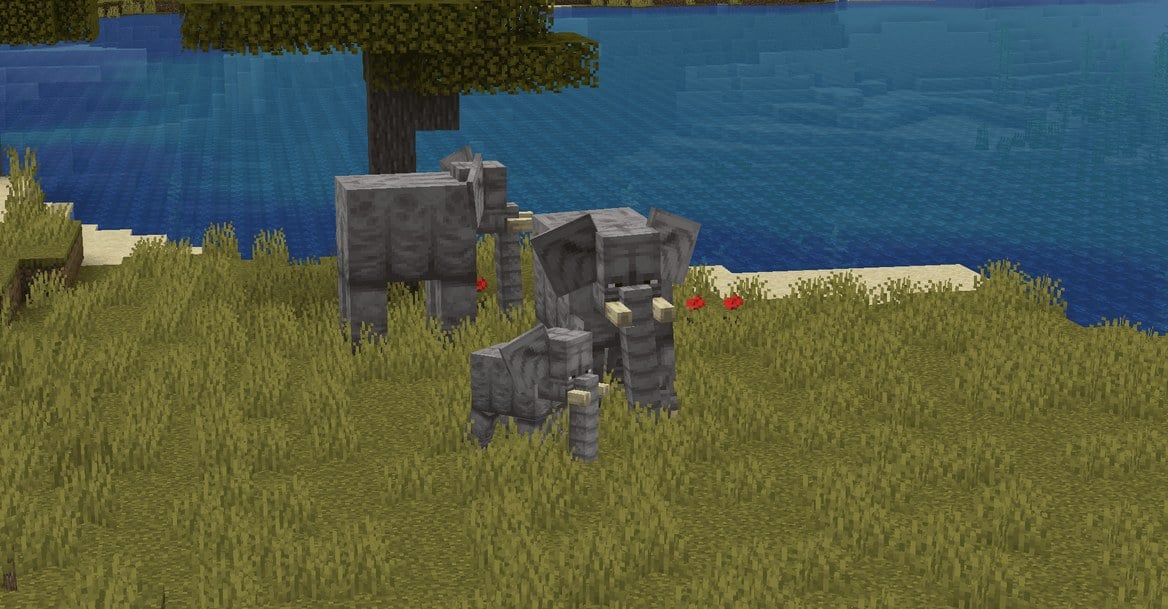
Image by crispytwig via CurseForge
| Animal | Where It Spawns | Worth Knowing |
|---|---|---|
| Elephant | Savanna biomes | Feed a baby 5 cakes to tame it. Tamed adults take a saddle and a chest with 25 slots. |
| Giraffe | Savanna biomes | Can drop bushmeat and hay blocks. |
| Lion | Savanna biomes | Spawns in prides of 3 to 5. Cubs tame with meat. |
| Rhino | Savanna biomes | Can drop hide and bushmeat. |
| Zebra | Savanna biomes | Accepts a saddle. Untamed zebras run when ridden, like horses. |
| Ostrich | Savanna biomes | Breed with seeds. A baby tames with one seed, and tamed adults can be ridden. |
| Hippo | Savanna and jungle biomes | Tame a baby with a melon block. Climbs out of water to chase you. |
| Vulture | Savanna, badlands, and desert biomes | Perches on cacti. |
| Komodo Dragon | Badlands, savanna, desert, and jungle biomes | Its bite poisons you for 5 seconds. Turns hostile if you linger nearby. |
| Desert Scorpion | Desert and badlands biomes | Hostile in darkness and poisons for 6 seconds. A Capture Net can catch it. |
Forest, Plains, and Taiga Animals
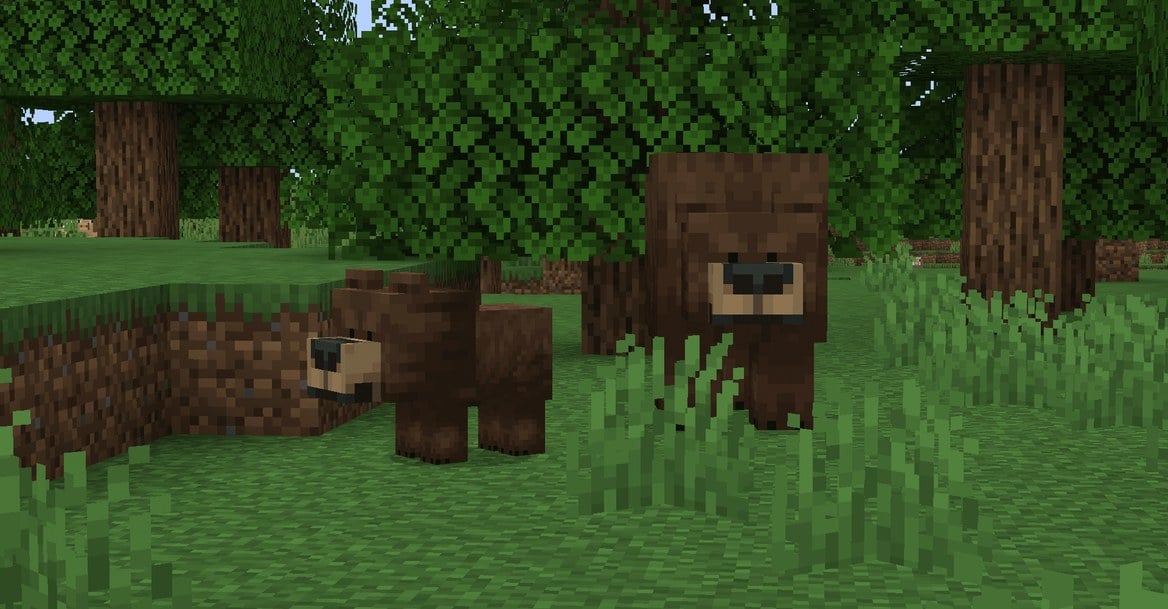
Image by crispytwig via CurseForge
| Animal | Where It Spawns | Worth Knowing |
|---|---|---|
| Bear | Forest and taiga biomes | Attacks at night or in darkness. |
| Black Bear | Forest, taiga, and grove biomes | Cubs tame with salmon, honeycomb, sweet berries, or venison. |
| Boar | Forest and savanna biomes | Can drop porkchops, fat, and hide. |
| Deer | Forest and cherry grove biomes | Can drop venison and antlers. Untamed wolves attack deer. |
| Hedgehog | Forest, flower forest, plains, meadow, and taiga biomes | Rolls up when you get within 6 blocks, unless you sneak or hold berries. |
| Mole | Forest, plains, and meadow biomes | Burrows when threatened and can’t be tamed. |
| Rat | Forest and plains biomes | Tames with bread. Released onto a chest, it harvests and replants crops within 7 blocks. |
| Turkey | Forest, flower forest, taiga, and grove biomes | Flees unless you crouch or hold seeds. |
| Bird | Many biomes, including forest, plains, taiga, savanna, swamp, desert, snowy and mountain biomes | The biome decides which of 8 variants you get. Dropped seeds tame it. |
| Butterfly | Forest, plains, and swamp biomes | Can’t use Nether portals alone. Carry it through in a Capture Net. |
| Caterpillar | No biome spawn in the mod’s data | Shares the Nether portal limit with the butterfly. |
| Firefly | Forest, plains, swamp, and mushroom field biomes | Drops Glow Goop. A Capture Net can catch it. |
| Snail | Most temperate biomes, plus lush and dripstone caves | Breeds on beetroot and produces slime balls. Dye it any color. |
Jungle, Swamp, and River Animals
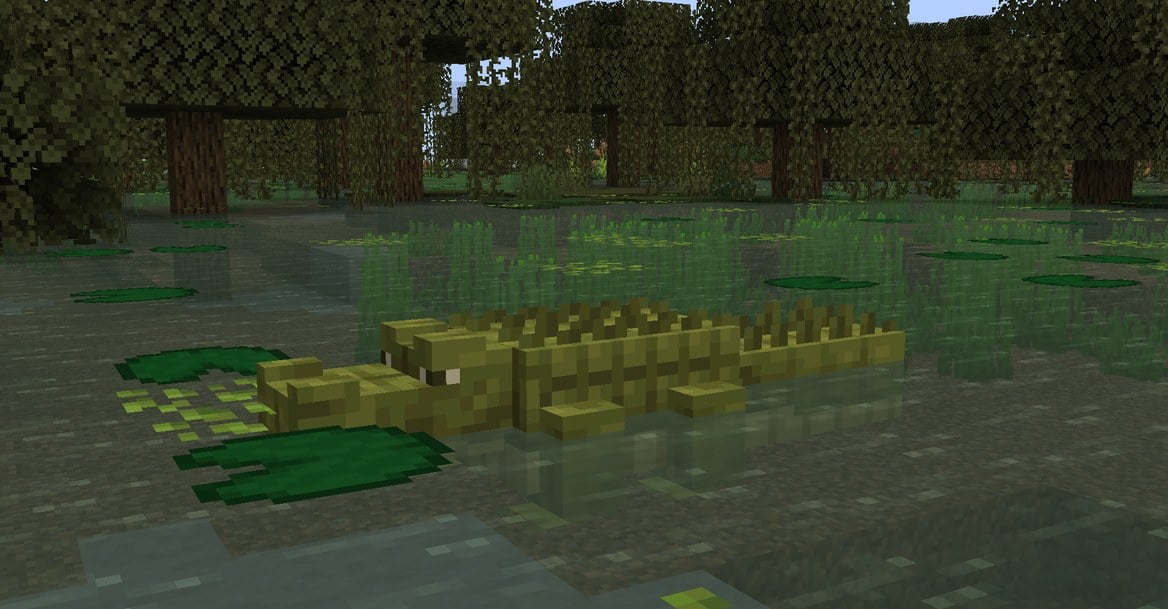
Image by crispytwig via CurseForge
| Animal | Where It Spawns | Worth Knowing |
|---|---|---|
| Alligator | Swamp, mangrove swamp, and river biomes | Attacks players in the water, at night, or near its eggs. |
| Ant | Ant hills in jungle and savanna biomes | Carries dropped food home. Hurting one alerts the rest. |
| Bass | Swamp, mangrove swamp, and river biomes | Comes in three sizes. Larger bass swallow smaller ones whole. |
| Capybara | Jungle, swamp, and mangrove swamp biomes | Tames with melon slices. Tamed capybaras follow you and sit on command. |
| Catfish | Swamp and mangrove swamp biomes | Swallows bass whole. |
| Dragonfly | Swamp and mangrove swamp biomes | Can drop froglass in three colors. |
| Duck | Swamp and river biomes | Tames with any fish item. |
| Jungle Scorpion | Jungle biomes | Larger than the desert scorpion, and a Capture Net can’t catch it. |
| Lizard | Swamp, mangrove swamp, desert, jungle, forest, and savanna biomes | Taming one raises its max health. |
| Piranha | Jungle biomes and lush caves | Schools of up to 24. Attacking one turns the whole school on you. |
| Snake | Forest, plains, swamp, jungle, river, beach, desert, badlands, and savanna biomes | Green, coral, and rattlesnake variants by biome. Tames with spider eyes or rabbit meat. |
| Tiger | Jungle, mountain, badlands, swamp, desert, dark forest, cherry grove, and snowy biomes | Biome sets the variant: white tiger, leopard, or black panther. Cubs tame with meat. |
| Tortoise | Swamp, mangrove swamp, desert, and jungle biomes | Taming one raises its max health. Can drop a turtle scute. |
Ocean, Beach, and Snow Animals
Every ocean animal below spawns in ocean biomes except frozen oceans, apart from the great white shark.
| Animal | Where It Spawns | Worth Knowing |
|---|---|---|
| Anglerfish | Ocean biomes | Spawns as a glowing variant deeper down. |
| Blobfish | Ocean biomes | Turns into a pink blob after 5 seconds near the surface. |
| Clam | Ocean floors | 5% carry treasure, such as an Ender Pearl or Heart of the Sea. |
| Crab | Beaches and stony shores | Tames with tropical fish. Picks up dropped swords and tools. |
| Giant Isopod | Ocean floors | Curls up within 3 blocks of you, which halves the damage it takes. |
| Great White Shark | Warm, lukewarm, and deep lukewarm oceans | Attacks players in the water in low light. |
| Jellyfish | Ocean biomes | Stings anything that touches it. Whales are immune. |
| Ray | Ocean biomes | Passive, but anyone who attacks it gets poisoned for 5 seconds. |
| Starfish | Ocean floors | Drops its placeable block form. |
| Whale | Ocean biomes | Breeds on cod, salmon, and crab meat. Immune to jellyfish stings. |
| Mammoth | Snowy plains, ice spikes, snowy slopes, and frozen peaks | Herds of 2 to 3. Feed a baby 5 cakes to tame it, then saddle the adult. |
Three items help you handle the animals. The Capture Net catches many small mobs, the Whistle switches tamed mobs between following and wandering, and the Knapsack carries any baby mob.
Common Issues
The most common reason is a version mismatch. Check that the server and every client run Minecraft 1.21.1 with Fabric, and that each player has both Naturalist and Fabric API. Fabric’s required dependency is easy to miss. If the server won’t start, the console usually names the missing mod. Re-upload the files, then restart. Our Support Team can help if it still fails.
Naturalist for Fabric won’t load without Fabric API. Modbox does not install dependencies automatically, so add Fabric API by hand through Modbox or FTP File Access. Make sure it targets Minecraft 1.21.1 as well.
Land animals mostly spawn as new chunks generate, so travel past the edge of your explored map. Other mods can conflict with Naturalist, so if the animals never appear, test it with fewer mods installed.
Naturalist Mod FAQ
Yes. The mod is required on both the client and the server, so every player needs Naturalist and Fabric API in their own mods folder.
The 1.21.1 build comes for Fabric and NeoForge, with no Forge file. Fabric also needs Fabric API. The server steps in this guide use Fabric.
You can install it on an existing server, but the animals mostly show up in newly generated terrain. Back up your world first, as you would before adding any mod. Our guide on adding mods also covers generating a new world.